GALLOWAY BLOG

Take a peek at some of our fresh content and engage with us in meaningful and thought provoking discussions

This is your Life at Galloway Ridge Late Spring 2025 Observations and musings from Norm

The Ecology of the Commonplace

By Galloway Ridge resident and founding Dean of the Nicholas School of the Environment at Duke University, Norm Christensen..

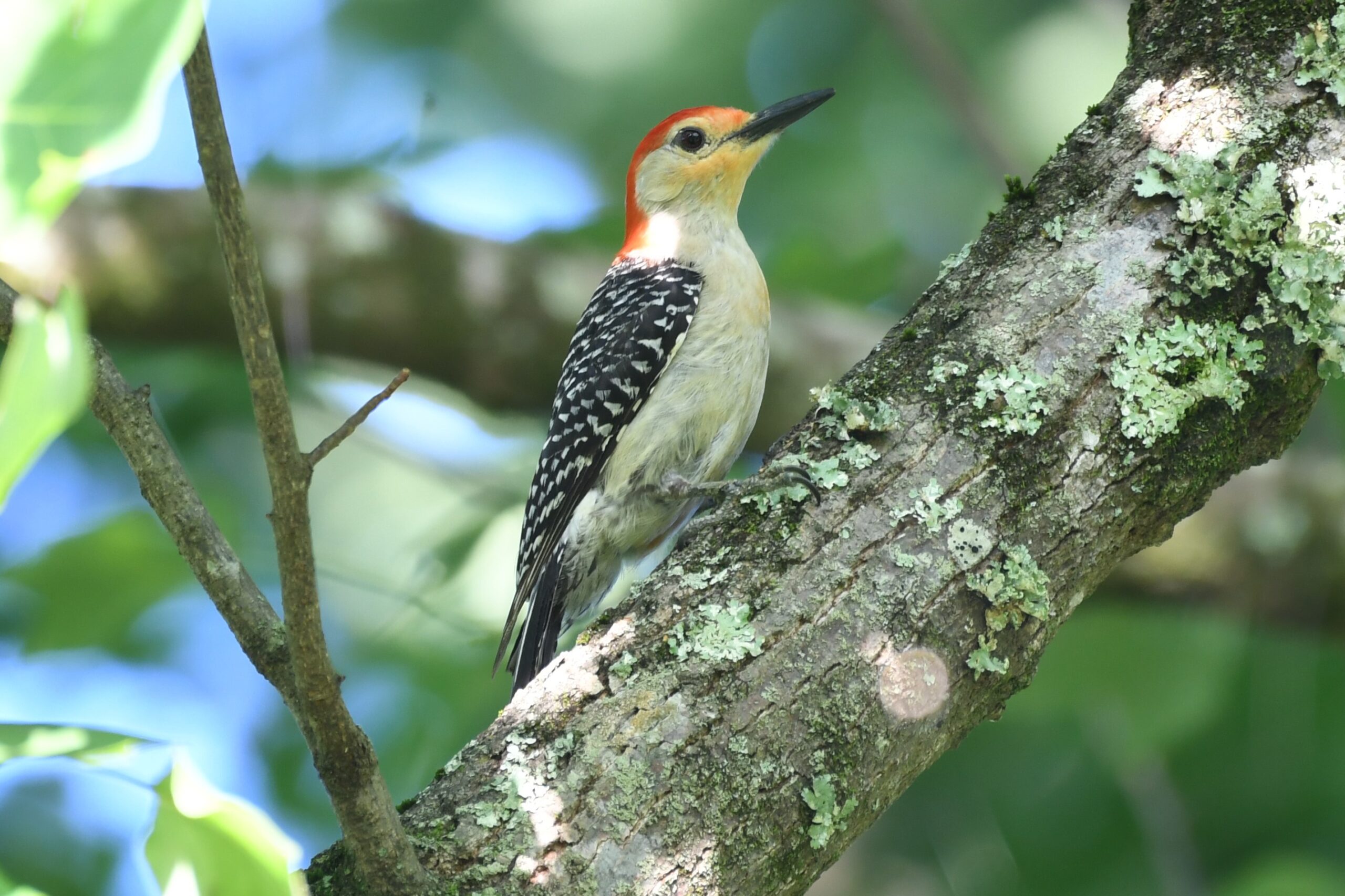
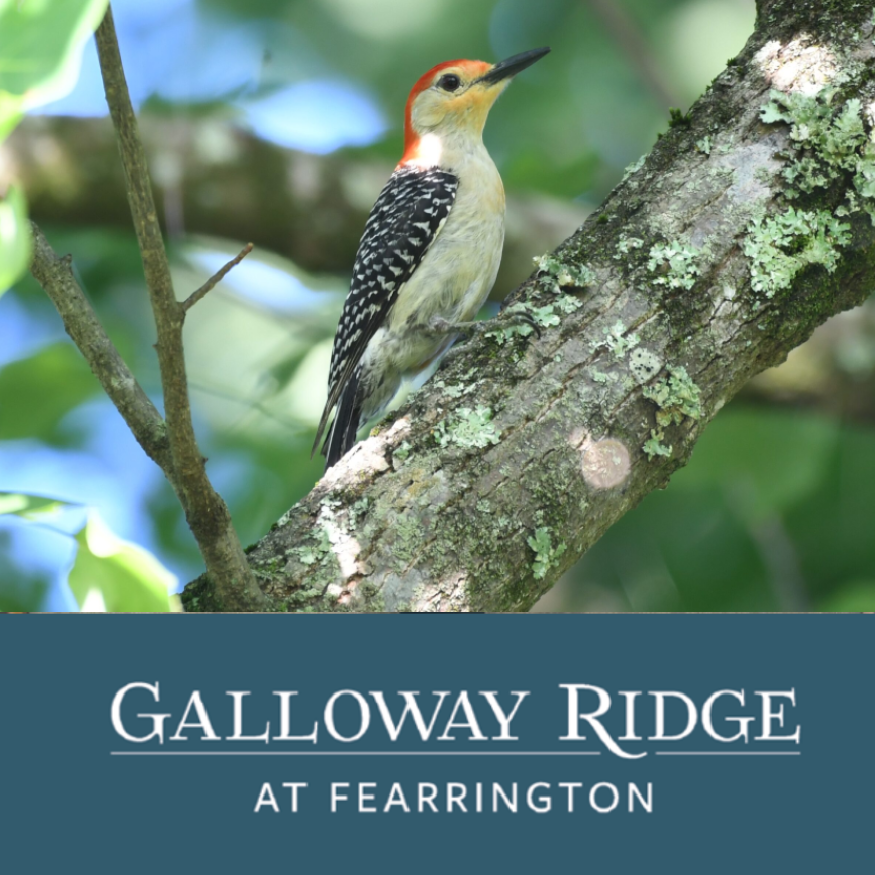
Male red-bellied woodpecker

red belly male

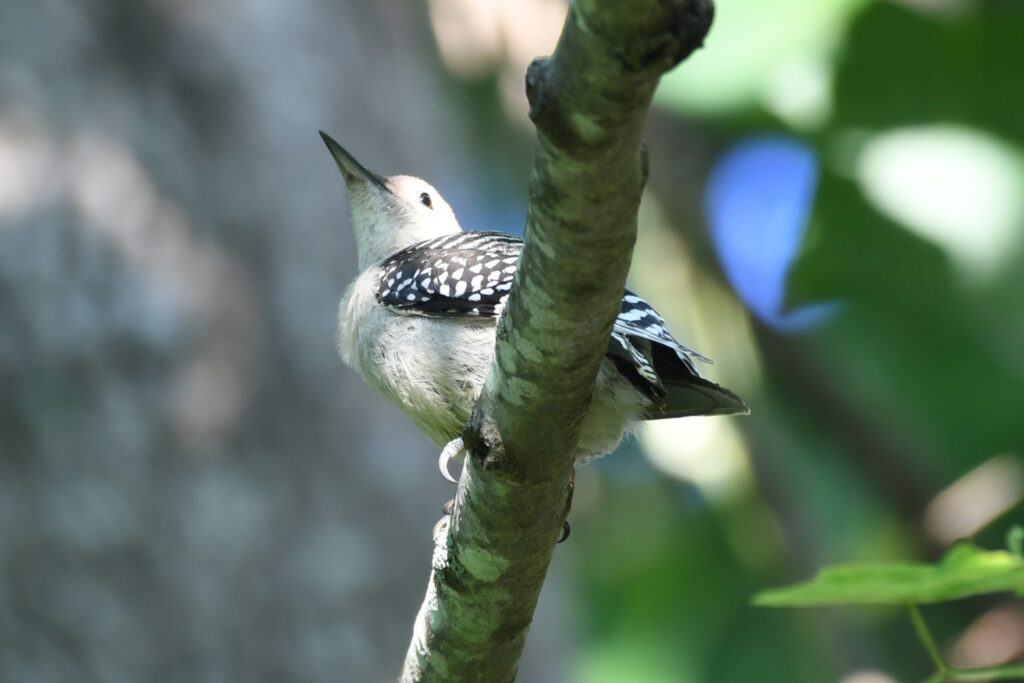
Female red-bellied Woodpecker—her red belly is barely visible

Astronomically, summer begins on the solstice, Friday, June 20, the longest day of the year. Climate wise, I’m sure you agree that it’s already here. Our white-throated sparrows and dark-eyed juncos have migrated to the high elevation Blue Ridge and Smoky Mountains to escape the heat. Walk the Bridges or Boulder Trail at dusk and you will see fireflies everywhere. Unusual birds such as yellow-billed cuckoos and blue grosbeaks have returned from their tropical winter retreats. Instead of focusing on these more oftenheard-than-seen species, I would like to focus on the ecology of animals and plants you are likely to see every day here at Galloway. What follows is a rather random sampling. I will try to hold a place in future editions of this epistle for the ecology of commonplace things.

Birds—Ten species that are common in Galloway’s Rose and Zen Gardens

Carolina wren

Small brown birds, they are easily recognized by their white eyestripe and up-cocked tail. Wherever you reside at Galloway, they are very likely the first, last, and loudest birds you will hear all day. Males and females look alike and are more easily distinguished by their call. Females chatter repeatedly while males respond with a slightly more melodic teakettle-teakettle-teakettle. They build untidy nests almost anywhere… e.g., dryer vents and shoes left on your porch. They are constantly moving about in search of insects and spiders, but are also regular visitors to our feeders. The bird on the left is newly fledged and not especially happy about it.

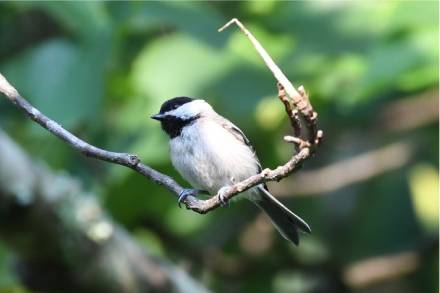
Carolina chickadee

Another frequent visitor to our feeders, these small birds get their name from its song—chickadee-deedee. Year-round, they are easily seen in our woods hopping from branch to branch, often hanging upside down to snag an insect. They are picky eaters at the feeder, tossing aside larger seeds for smaller morsels they can more easily swallow with their small beaks. Males and females look alike, although I presume that they can tell the difference. They mate for life. Carolina chickadees are nearly identical to black-capped chickadees that reside at high elevations in the Blue Ridge

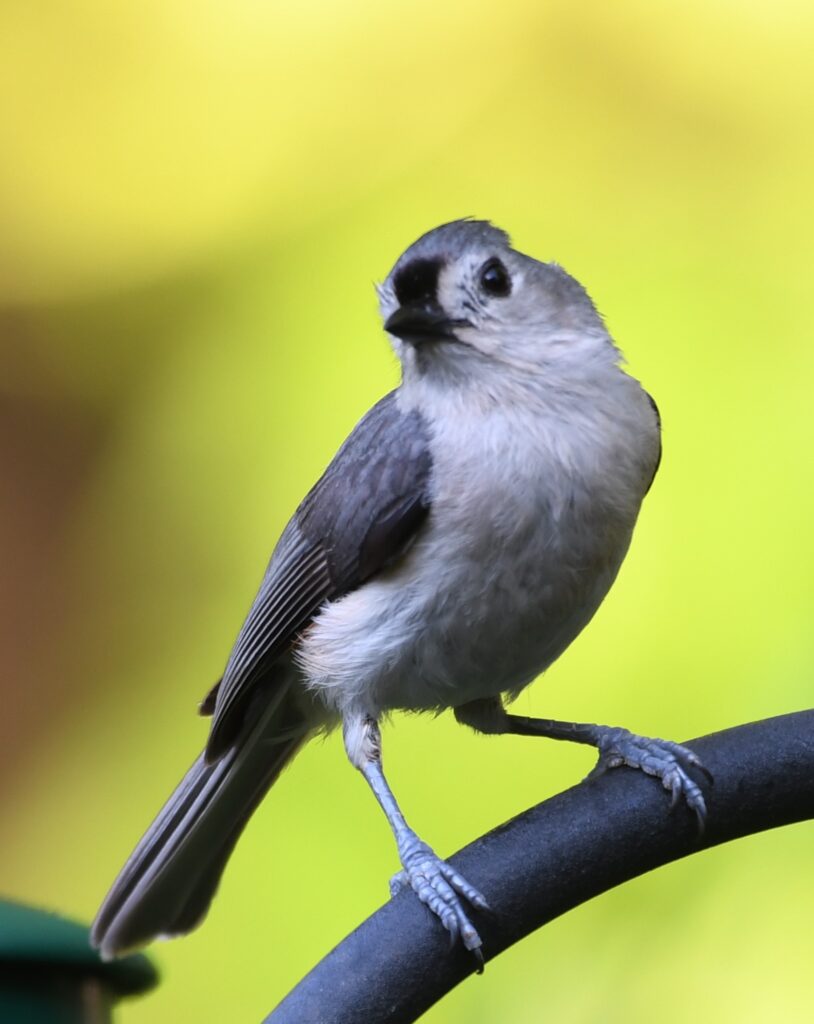
Tufted titmouse

In the same family as chickadees, titmice are also here year-round. They are distinguished by their tufted crest and light patch of brown below their wings. Males and females look and sound (peter-peter-peter) alike. They nest in cavities and sometimes compete with our bluebirds for nesting boxes and often line their nests with animal hair, which they may boldly pluck from live mammals, including humans. Titmice eat mostly berries and seeds. They rarely consume seeds at the feeder. Instead, you will see them grab a seed, then fly to a perch where they use their beaks to break it into more easily consumed pieces.

Northern cardinal

Growing up in California, I was not used to seeing bright red birds, so my first sight of a male cardinal was something of a shock. Males are distinguished from other bright red birds (e.g., tanagers) by their thick orange beak, black mask and crest. Females are brown, but hardly drab. They, too, are easily identified by their crest and orange beaks. Their most familiar song is an encouraging cheer-cheer-cheer. Cardinals are most abundant in tangles and shrubs, which is also where they build their nests. They also commonly nest in planted shrubbery, such as in GR courtyards. They feed mostly on seeds and berries but also take larger insects when such are available.

Northern mockingbird

They aggressively dominate other birds at our feeders, but their diet is comprised mostly of insects. Because of their lyrical song (often imitating other birds), they were prized in the pet trade during the 19th century; so much so, that they became rare in parts of their range. However, mockingbirds are well adapted to urban environments and are now abundant across most of temperate North America. They are one of the few songbirds you may hear during the night.

Eastern bluebird

Galloway is blessed with an abundance of these beautiful birds year-round. Bluebirds are in the thrush family (Turdidae), which also includes robins. You can tell them from other blue birds (indigo bunting and blue grosbeak) by the brown on their sides and breasts. During the breeding season, the heads, wings, and tails of males are brilliant blue. Female colors are more muted. Plumage is drabber for both sexes in the winter. Bluebirds historically nested in cavities in trees.  

Nowadays, many nest in boxes specifically designed for them. The many boxes here on our campus no doubt contribute to bluebird abundance here. Although they eat berries and seeds and are frequent visitors to our seed feeders, they prefer insects and their larvae.

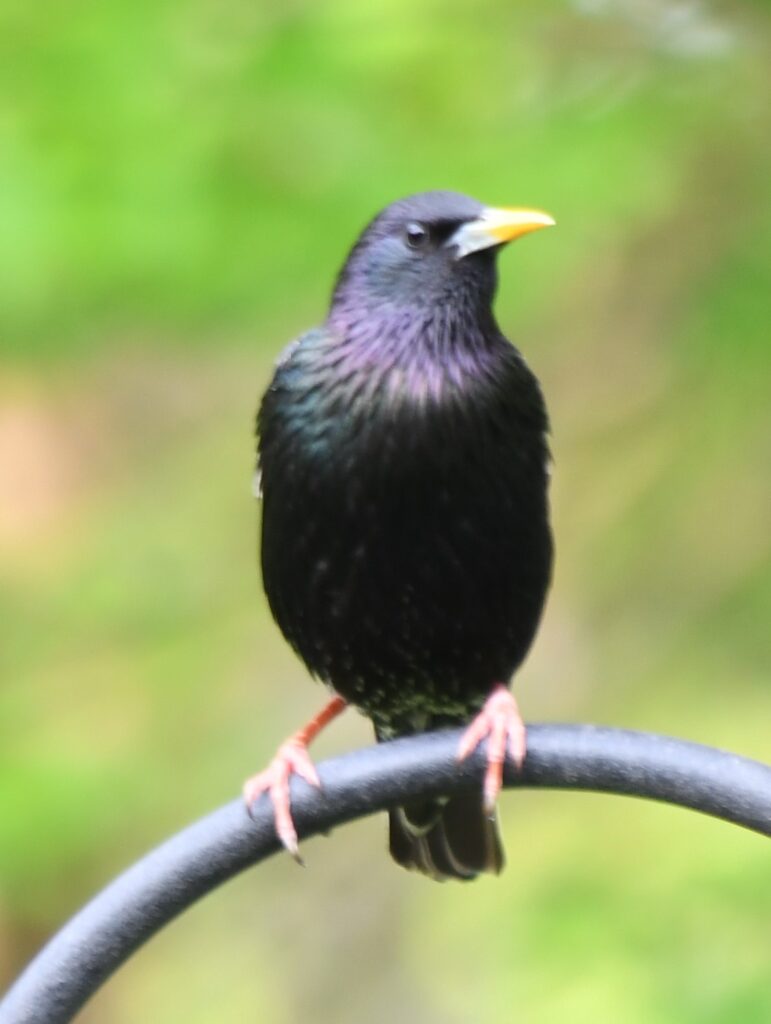
European starling

As I have recounted in previous essays, the European starling was introduced to North America in the late 1800s based on the benighted notion that all birds mentioned by Shakespeare ought to be present on our continent, too. Well, indeed, they are everywhere in North America and immediately recognized by their iridescent plumage and yellow bills. They are especially well adapted to urban and agricultural environments where they feed on insects, seeds, and berries. They are regular and aggressive visitors to feeders in Galloway courtyards (sadly?). During the winter, they gather by the thousands in large flocks (aptly called murmurations) that move in amazing synchrony. Flocks disband during the breeding season, and pairs nest in just about any hole or crevice they can find.

House sparrow

This is the only “Old-World sparrow” (Passeridae) found in eastern North America. Our native sparrows are anatomically distinct and in a separate family, the Emberizidae. House sparrows were introduced in New York in the mid-19th century and today are abundant throughout temperate North America. Like house mice, they are mostly found where there are people. That includes the courtyard areas at Galloway Ridge, much to the dismay of many of you. In these areas, they often take over the nests of native species such as cardinals and towhees. You will not see them, however, in any of our woods. They simply cannot compete with our native

American Goldfinch ​

Worldwide, there are over 200 finch species distributed among 25 genera. Finches have round, finch-like (duh) heads with prominent conical beaks that are adapted for eating seeds. Goldfinches are especially abundant on the GR campus, especially in open areas such as around the Pond Loop. In the summer, males are bright canary yellow with a black mask and black wingtips. Females are paler and lack black on the head. Although goldfinches have paired up, they will not establish nests until July. This is likely to ensure that there will be an abundance of seed for the young. Goldfinches form large flocks in the winter and lose their brilliant colors.

House finch

House finches are also common visitors to GR feeders. Males are distinguished by the red on their heads and upper breast. Females lack any red but can be identified by the brown stripes on their necks and breasts.

Cute or What?

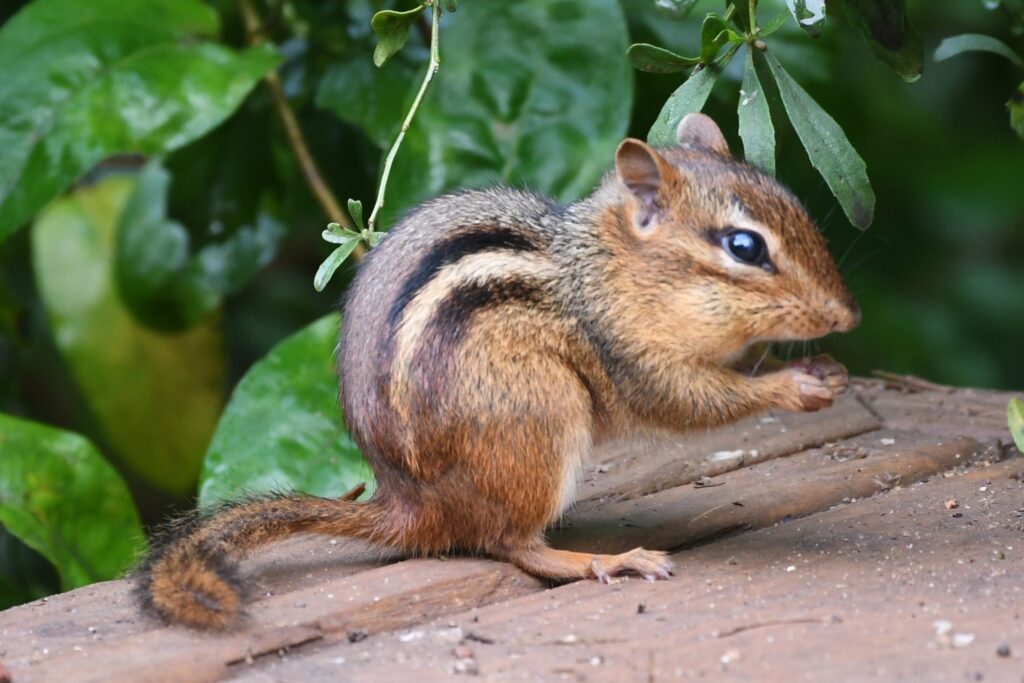
Eastern chipmunk Tamius striatus

Chipmunks and flying squirrels are among the more common but least seen mammals here at GR. Western chipmunks are gregarious, but our chipmunks are more timid. They nest in deciduous woods in underground burrows, feeding in the daytime on seeds, berries, insects, and worms. They also find suitable habitat in our courtyard gardens, thriving on seeds scattered from bird feeders. The individual on the left visits the base of my bird feeder nearly every morning.

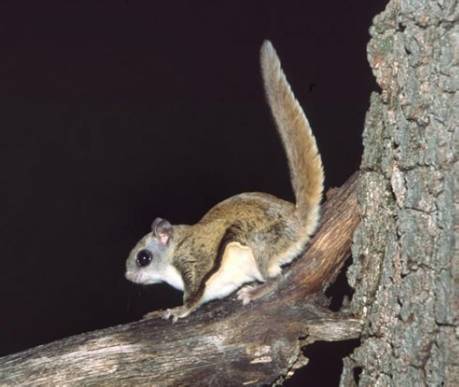
Northern flying squirrel Glaucomys sabrinus

Flying squirrels do indeed reside in our deciduous woods, nesting in the cavities of live and dead trees. They feed on the ground and their diet is almost identical to that of chipmunks. They glide or parachute from their nests to the ground, taking advantage of the skin flaps between their front and back legs (thus their name). Because they are small and strictly nocturnal, they are rarely seen. That they wear pilot’s caps and have moose friends is mostly a myth!

Turtles – Three turtle species are common at Galloway

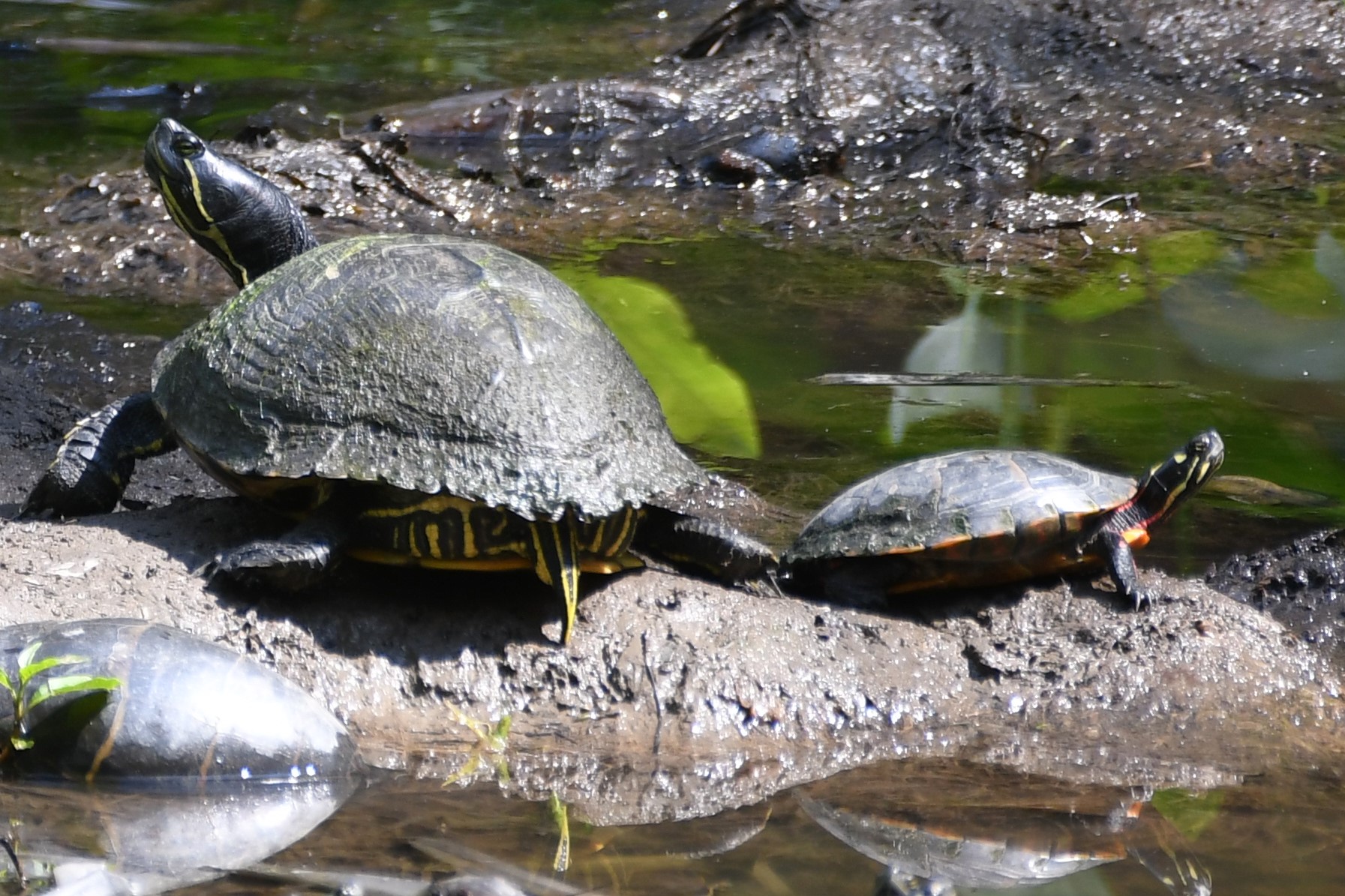
Painted Turtle (Chrysemys picta)

These are the most common turtles in the Southeast and in our ponds. You will see them in all sizes (1-10 inches in length), craning their yellow-striped necks along the edges of open water. The young are carnivorous, feeding on insects and tadpoles. Adults mostly eat vegetation, but won’t pass a wounded or dead frog or fish. The adults have few natural predators, but the young may be taken by raccoons, snapping turtles, and water snakes.

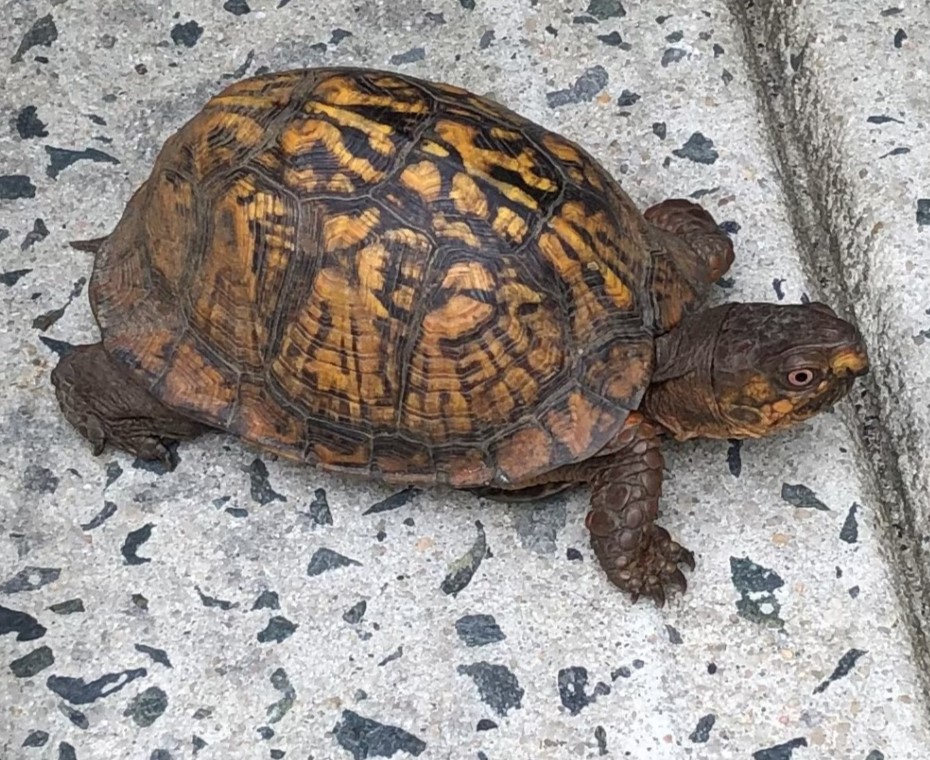
Eastern Box Turtle (Terrapene carolina)

Box turtles are North Carolina’s state reptile, and they are abundant from the mountains to the sea. They are common in our GR woods. Thanks to Susan and David Puett, who photographed this one on their patio. Box turtles are strictly terrestrial, unlike all other NC turtles, but are not closely related to tortoises. Their belly or plastron is hinged at the tail and head so that they can close their shell completely. The plastron of females is flat; it’s concave in males to facilitate mating. Turtles lead lonely lives, and they make no sounds that would alert potential mates of their whereabouts. Consequently, they must work very hard to find a mate. To cope with the low probability of bumping into a male, females store sperm and establish several nests from a single mating episode over several years. Females use their hind legs to bury eggs in loose soil. They may do this several times in several places during a year. Box turtles are omnivores and feed on vegetation, mushrooms, earthworms, and carrion. They are known to live over a century in captivity, but probably shorter in the wild.

Common Snapping Turtle (Chelydra serpentina)

A face only a mother could love! Snapping turtles of various kinds have been around since the age of the dinosaurs, over 90 million years—and they look it! There are several large (18 inches snout to tail) ones in our ponds. You may see their heads poking above the water surface, but they spend most of their time in the depths feeding on aquatic plants, insects, fish and tadpoles. They are accused of eating ducklings in our ponds, but I think that snakes and foxes may be more responsible for duckling mortality. This time of year, females leave the water to lay their eggs in sandy locations often some distance from the ponds. Thanks to Mary Heaton for the bottom photo of a female laying her eggs in the gravel path on the Boulder Trail a few weeks ago. The turtle at the top was laying her eggs in Pam and Don Bailey’s garden.

Flowering Plants

These 18 plants are flowering right now and can all be found in the grass/meadow surrounding our ponds.

Grasses and sedges

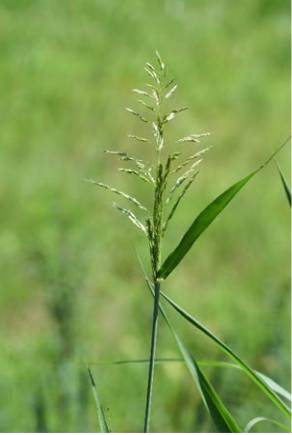
Johnson grass
Sorghum halapense

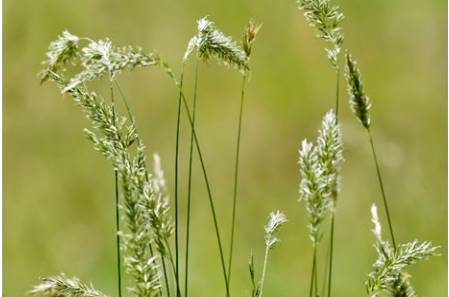
Sweet vernal grass Anthoxanthum odoratum

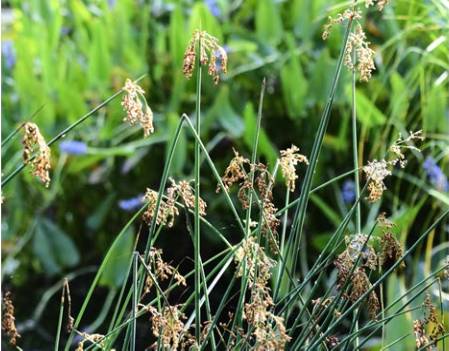
These three grass species (top row) are native to Europe and are common in pastures and lawns. I have identified a total of 7 grass species in this area. The three sedges are NC natives and typically grow near water. All are wind pollinated. Their seeds are an important resource for a variety of birds (e.g., goldfinches) and small mammals.

Orchard grass
Dactylis glomerata

Globe flatsedge
Cyperus echinatus

Bulrush
Schoenoplectus sp.

Fox sedge
Carex vulpinoidea

White Flowers

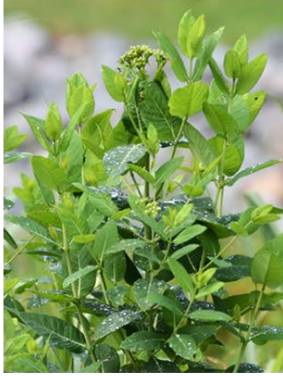
Hemp dogbane
Apocynum cannabinum

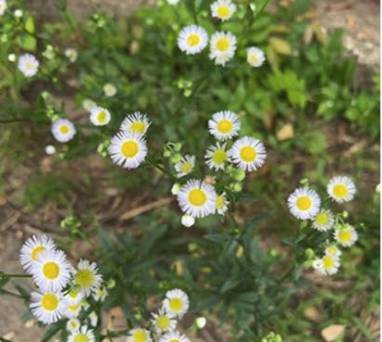
Horseweed
Erigeron canadensis

The three species in the top row are native to NC, and the bottom three were brought here long ago from Europe. Although not flowering, they all can be found in frequently mown areas. Each species is considered invasive, but all are an important resource for insect pollinators. White clover is widely planted as ground cover. It competes well with grasses on infertile soils. Horseweed, everlasting, plantain and dogbane are sources for several medicinal chemicals.

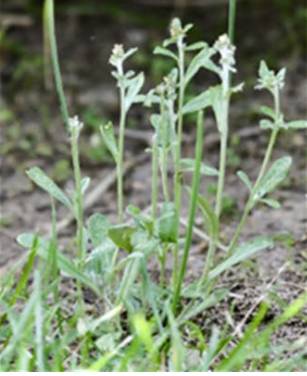
Everlasting
Gnaphalium sp.

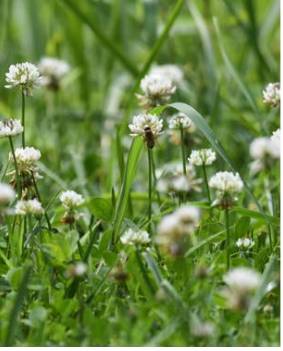
White clover
Trifolium repens

Common plantain
Plantago lanceolata

Oxeye daisy
Leucanthemum vulgare

Yellow flowers

Dandelion
Taraxacum officinale

Cat’s ear
Hypochaeris radicata

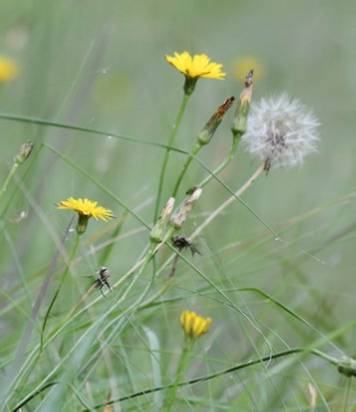
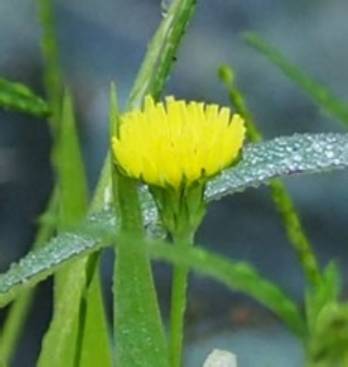
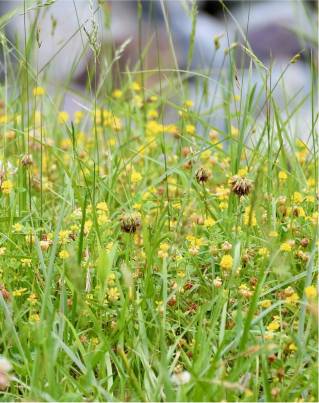
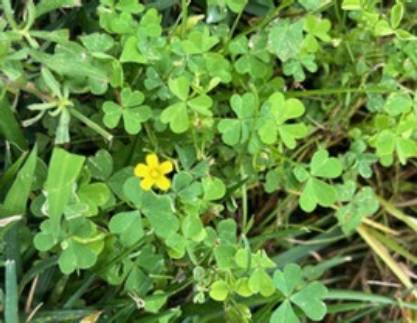
Among these 6 plants, only slender woodsorrel is native. Flower color does influence pollinator preference. Yellow flowers are preferred by butterflies and hummingbirds, whereas bees and flies frequent white flowers more often. But this really is just a matter of preference. You will see bees on flowers of almost any color.

False dandelion
Pyrrohopappus carolineanus

Sweet clover
Melilotus officinalis

Slender woodsorrel
Oxalis dillenii

Buttercup
Ranunculus sp.

Ferns

Ferns are vascular plants, meaning they have xylem to transport water and phloem to transport nutrients up and down stems and fronds. They are distinguished from other vascular plants (e.g., conifers and flowering plants) by their dependence on spores in reproduction. Spores are generally produced in specialized “sori” on the backs of fronds. However, some ferns (e.g., grape fern and cinnamon fern—both present but rare at GR) produce spores on specialized fronds called “sporophylls”. The leafy fern plant you see is a sporophyte with a duplicate set of chromosomes (2-n, like us). Spores, however, contain only a single set of chromosomes (1-n). In a suitably moist location spores germinate and form small (~1cm) heart-shaped gametophytes. Gametophytes produce male and female gametes that unite to form new sporophyte zygotes. These are the beginning of new fern plants. Four common ferns in our woods are (clockwise) the netted chain fern (Woodwardia aureolata), wood fern (Dryopteris intermedia), Christmas fern (Polystichum achrostichoides) and ebony spleenwort (Asplenium platyneuron).

In the next issue I plan to focus on the ecology of our ponds. Until then, Enjoy Life!

Galloway Ridge at Fearrington
Privacy Overview

This website uses cookies so that we can provide you with the best user experience possible. Cookie information is stored in your browser and performs functions such as recognising you when you return to our website and helping our team to understand which sections of the website you find most interesting and useful.